
China sourcing is more than finding a factory.
A practical guide for European buyers: where to source, how to shortlist suppliers, what to verify, and how to control quality, logistics, payment terms, and follow-up.
What this guide helps you decide
The goal is not to collect more supplier names. The goal is to choose the right starting point, avoid weak suppliers, and build a sourcing process that can be repeated.
What buyers can get from this guide.
China sourcing has become more complex and dynamic. A strong sourcing result needs clear thinking before contacting suppliers.
A structured way to think
Understand sourcing decisions before sending messages to suppliers or collecting quotations.
A practical where-to-source map
Connect product categories with real regional and city-level industrial specialisation.
Action-oriented guidance
Apply the logic directly to supplier search, evaluation, contracting, shipping, and improvement.
China sourcing is no longer a simple process of “finding a factory and placing an order.” Costs shift. Compliance expectations tighten. Lead times change. Geopolitics and logistics add uncertainty.
China’s advantage is now more about ecosystems than low labour cost.
In many categories, China’s practical advantage is cluster density: materials, components, tooling, assembly, packaging, logistics, and export services often sit close together.
Full-stack clusters
China’s advantage in many categories is no longer cheap labour alone; it is cluster density and execution speed.
Export servicing
Many factories have become better at documentation, delivery discipline, and overseas buyer expectations.
Efficiency still competes
Automation, specialisation, and cluster-based coordination can keep total cost to deliver competitive.
Digital access
Digital procurement improves supplier discovery, but professional validation remains essential.
China works as a co-located supply ecosystem, not only an assembly country.
For importers, the useful lens is how China combines labour, infrastructure, supplier networks, technical teams, components, and export capacity into one operating system.
Shorter sampling cycles
Co-located suppliers can make sample revisions faster and reduce communication delays across the supply chain.
Faster engineering changes
Supplier density and technical talent pools can shorten the path from concept to mass production.
Lower coordination cost
Local supply networks often respond faster than cross-border component chains.
Even when buyers use a “China Plus One” strategy, China may remain a key upstream source of supply-chain value for components, materials, tooling, and technical support.
Good sourcing compares total cost of ownership, not only unit price.
The lowest quotation may not be the best sourcing decision. Buyers should compare coordination cost, sample speed, documentation, quality stability, logistics, and reorder reliability.
From cost base to efficiency base
Cluster effects compress logistics and communication cost. Local supply networks can respond to design changes faster.
From contract manufacturing to engineering-led execution
Deeper technical talent and mature supplier systems can improve concept-to-production speed.
From single-step production to end-to-end coverage
In many categories, suppliers can support broader scopes from materials to finished goods.
A six-step sourcing workflow for European buyers.
This workflow turns sourcing from a random supplier search into a structured process that can be reviewed, repeated, and improved.
Where to source
Map category to the correct region and city cluster.
Who to shortlist
Build 10–20 candidates; reduce to 3–5 credible finalists.
How to validate
Use factory/trader checks, qualification review, and sample discipline.
How to contract
Lock specifications, QC gates, remedies, payment terms, and Incoterms.
How to ship
Model landed cost, routing options, packaging, and reorder rhythm.
How to improve
Track supplier performance and build a repeatable sourcing programme.
China should be viewed through regional sourcing clusters.
China is too large and too specialised to be treated as a single sourcing market. This six-region view helps buyers start in the right place faster.
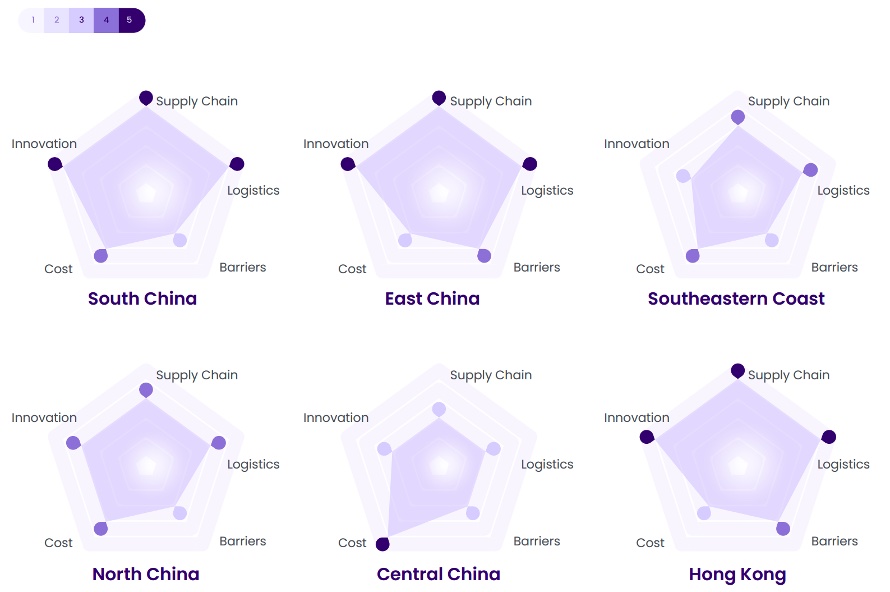
Industrial base
Legacy industrial capacity, heavy-industry concentration, bulk trade, and deep-water port links.
Inland production hubs
Cost advantages and growing industrial capacity in inland manufacturing regions.
Mature ecosystems
Highly mature supply chains and dense industrial ecosystems across multiple categories.
Light manufacturing
Strong light manufacturing clusters and export-focused production networks.
Trade gateway
Trade, logistics, compliance, settlement, and cross-border sourcing support.
Fast iteration
Export-oriented clusters with strong electronics, consumer manufacturing, and rapid product iteration.
Six questions buyers should ask before choosing a region or supplier.
The purpose is not to “rank” regions, but to understand differences in speed, scale, cost, reliability, compliance, and coordination complexity.
| Question | Buyer decision meaning |
|---|---|
| Speed | Can the region support fast sampling, replenishment, and frequent design changes? |
| Scale | Can suppliers reliably handle large, scalable, or repeatable orders? |
| Cost efficiency | Does the region offer an advantage in total landed cost, not only unit price? |
| Reliability | Are delivery performance and quality consistency stable? |
| Compliance | Are regulatory, audit, certificate, and documentation requirements manageable? |
| Coordination ease | How complex is cross-factory and cross-region coordination? |
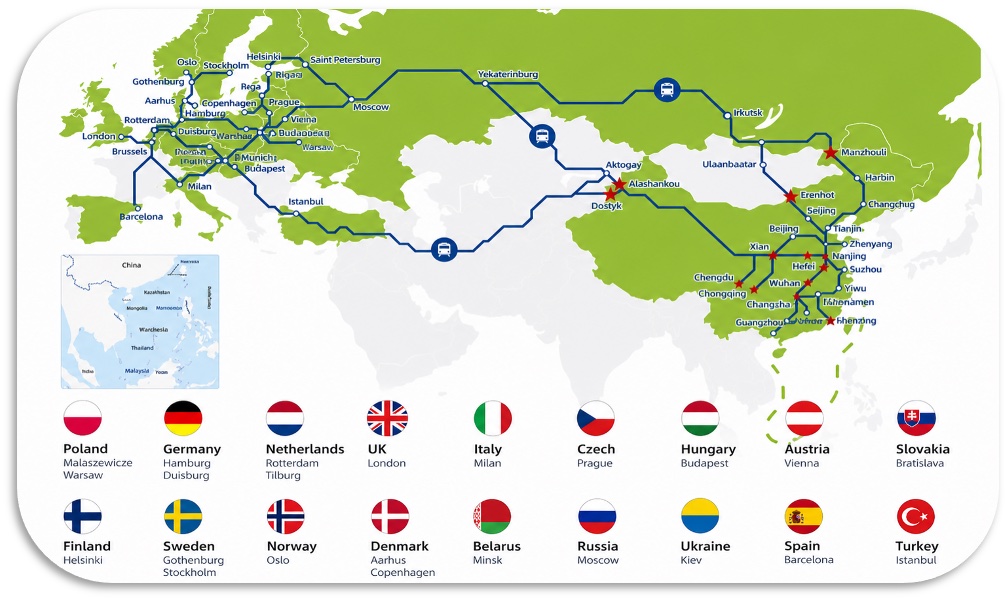
Logistics capacity is a practical part of sourcing execution.
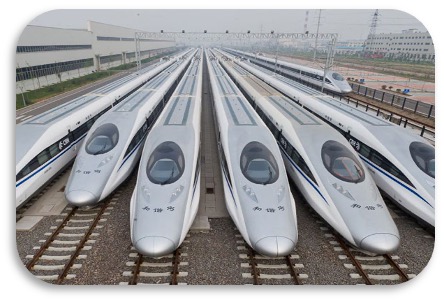
Port capacity affects sailing frequency, container processing, and shipment stability during peak seasons. Inland road and rail networks connect interior hubs to coastal export gateways and Europe routes.


Supplier validation is where many sourcing mistakes can be avoided.
A supplier website or online listing is only a starting point. Buyers need to check whether the supplier can support the product, quality level, documentation, order size, and delivery expectation.
Company reality
Factory, trader, hybrid operator, export agent, or category specialist?
Sample discipline
Can the supplier provide samples, revisions, technical details, and clear approval steps?
Document quality
Are certificates, datasheets, declarations, labels, and product information consistent?
Technical fit
Can the supplier meet product specifications, packaging, customization, and quality expectations?
Communication quality
Does the supplier answer clearly, consistently, and with practical execution details?
Execution readiness
Can the supplier support lead time, inspection, shipment, payment terms, and reorder rhythm?
We help apply this guide to real sourcing projects.
EU China Link is based in Finland and supported by Chinese sourcing experts with more than 20 years of experience. We help European buyers move from sourcing idea to supplier shortlist and practical next action.
Supplier search
Find suppliers based on category logic, product fit, and sourcing requirements.
Supplier checking
Review credibility, capability, documents, samples, and communication quality.
Execution support
Support RFQs, quotation comparison, quality planning, logistics questions, and next steps.
Tell us what you want to source from China.
Send us your product category, target quantity, required specifications, current supplier concerns, or sourcing challenge. We will review your case and suggest a practical next step.
- ✓Product name, category, photos, drawings, or reference links if available.
- ✓Estimated order quantity, target market, and required documentation.
- ✓Main concern: supplier search, validation, quotation, quality, sample, logistics, or reliability.